The fridge chore chart worked for about two weeks. A grid, a set of magnets, everyone's name across the top — for a little while it actually held. Then someone traveled for work, someone else caught a cold, and the grid had no way to represent "not this week." The chart didn't get updated so much as it got ignored, and it quietly turned back into a magnet holding up nothing in particular.
We're the Koto team. Koto is a shared to-do list app for couples and families, and chores are one of the first things people try to put in it. When we sat down to design a chore chart app for adults, we cut the single feature that most chore apps lead with: points. No stars, no scoring, no weekly winner. That wasn't an oversight — it's the decision this article is about, and why we think it's what actually makes a chore tracker app for adults different from one built for kids.
Koto is a shared to-do list for chores, groceries, and errands — built for adults, with no points or scoring.
See Koto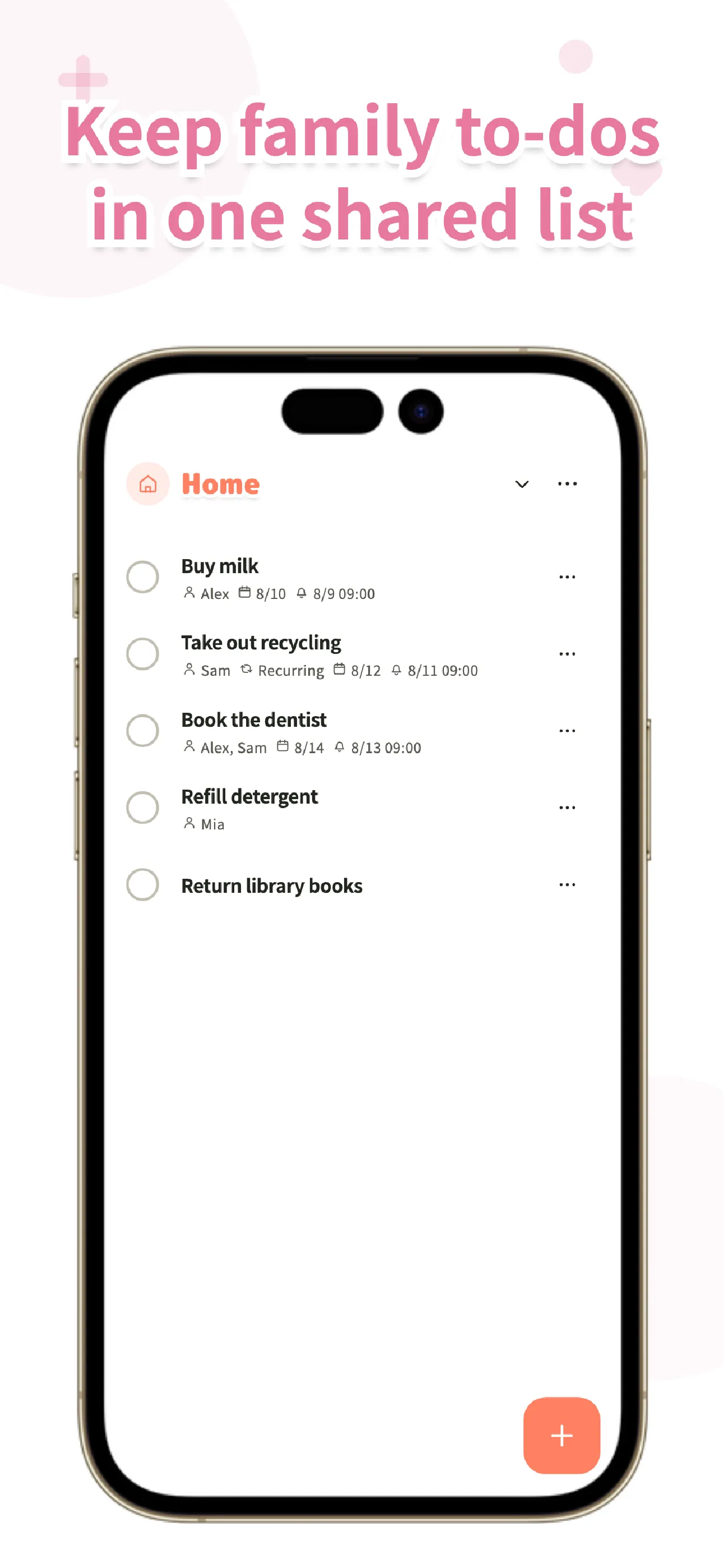
Why paper chore charts stall
A paper or magnet chore chart works right up until real life stops matching the grid. Sick days, travel, a swapped shift — none of that fits neatly into a chart drawn for a normal week, so the chart either gets crossed out and rewritten or, more often, just stops being trusted. Exceptions are what actually break it, not laziness.
There's also usually one person keeping it going — buying the new sheet, redrawing the grid, reminding everyone it exists. A household chore chart doesn't maintain itself, and the maintenance quietly becomes one more chore that isn't on the chart. And because it lives on the fridge, it can't nudge anyone. It can't tell you trash day is tonight while you're still at the office, and it's invisible the moment you leave the kitchen — which, for most households, is most of the day.
The problem with kid-style chore apps for adults
Search for a household chores app and most of what comes up is built around points, stars, and allowance — mechanics that make complete sense for parenting a child through chores. Between two adults, the same mechanics tend to curdle. A points tally stops being motivation and starts being an audit of who's ahead, which is a strange thing to be quietly competing over with the person you split rent or a mortgage with.
What adults actually need from a chore chart app for adults is much plainer than a scoreboard. A clear assignee, so there's no ambiguity about whose job the dishes are tonight. A due date, so "eventually" becomes a specific day. Repeats, because trash day and the monthly deep-clean come back on their own schedule whether or not anyone remembers to re-add them. A nudge at the right time, not a generic daily notification. And a way to know something got done without having to ask — which is the part a fridge chart and a points tally both fail at in opposite ways: one is silent, the other keeps score.
Comparing paper charts, kid-reward apps, to-do apps, and a shared list
Lined up side by side, the differences show up less in feature lists and more in who each option was actually designed for.
| Axis | Paper / magnet chart | Kid-reward chore apps | Generic to-do apps | Shared family list |
|---|---|---|---|---|
| Works for adults | No gamification, but static | Points/stars built for kids | Yes, but built for solo tasks | Yes — assignee and due date, no scoring |
| Handles exceptions | No — has to be redrawn | Manual reassignment | Manual editing | Reassign or reschedule in seconds |
| Repeats | No — rewritten each week | Usually yes | Often basic or missing | Weekly, monthly, custom intervals |
| Reminders | None | Usually yes | Yes, per task | Yes, tied to due date |
| Visible anywhere | Only in the kitchen | Yes, on phone | Yes, but not built to share | Yes, synced to everyone in the group |
| Maintenance burden | High — one person keeps it going | Low, but becomes scorekeeping | Medium — no shared "who does what" | Low — shared, not one person's job |
A generic to-do app or a note-taking app like Apple Reminders or Google Keep can absolutely hold a chore list. What it can't do natively is make the list shared — one household's grocery run, trash schedule, and deep-clean living in a single place that updates for everyone without anyone having to forward a screenshot. That's the gap a purpose-built shared list is meant to close.

Koto
A shared to-do list app for couples and families — also works well for roommates. Assign chores to one or more people, set them to repeat weekly or monthly, and see a history of who did what. No points, no scoring. Available now on the App Store and Google Play.
Learn more about KotoHow Koto handles adult chores without scoring
In Koto, a chore is a task on a shared list, and a task gets assigned to one person or several — trash day might be one person's job, while the monthly deep-clean gets split across everyone in the house. There's a due date, an optional note, and a place for a photo if it's useful ("bins go out like this"). None of it is scored, because the point isn't to rank who's doing more — it's to remove any doubt about whose turn it is.
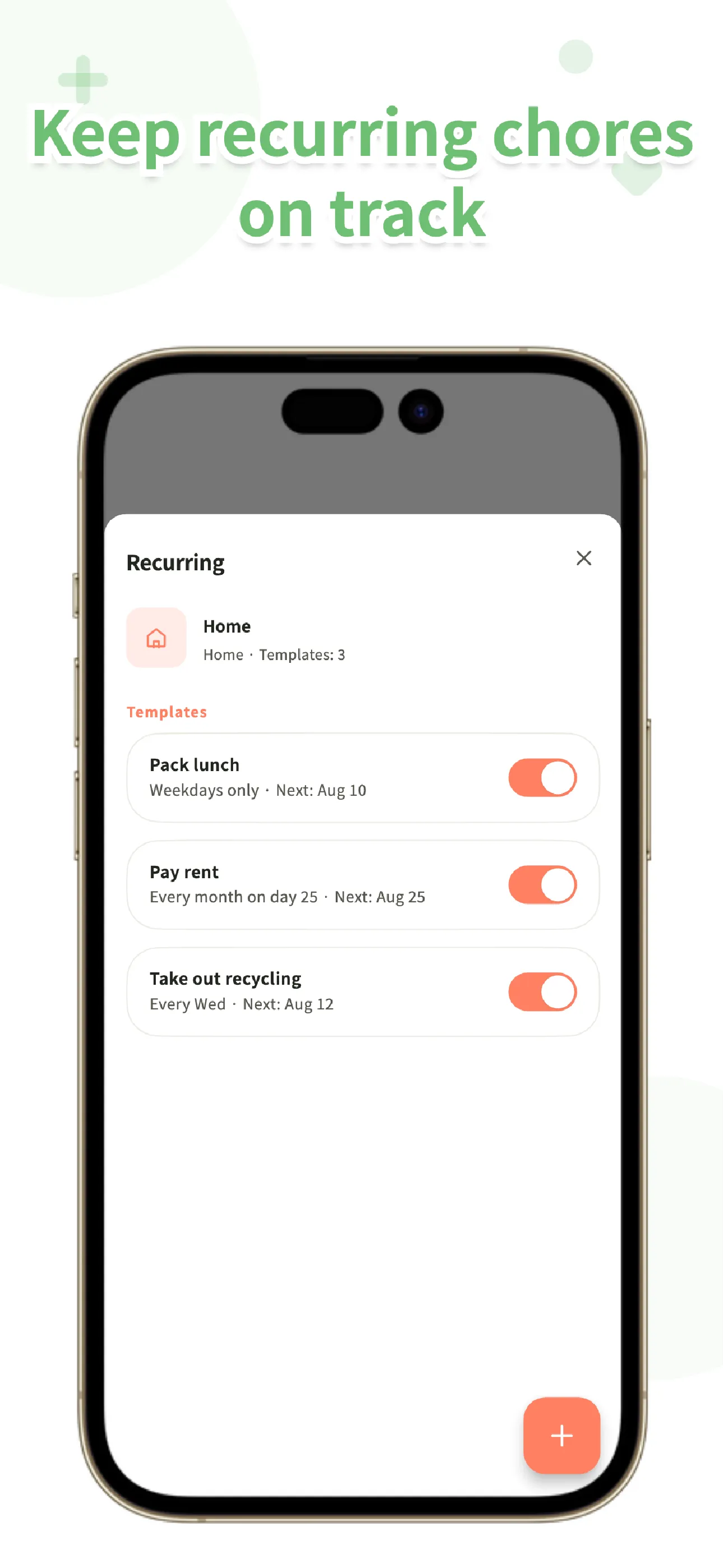
Chores rarely happen just once, so repeats are built around how real households actually schedule things: weekly on one or more weekdays for trash day or watering the plants, monthly by a fixed date or by the Nth weekday for a deep-clean that always lands on the first Saturday, weekdays-only or weekends-only for chores tied to a work schedule, or every N days for anything on its own cadence. Set it up once, and the task keeps reappearing on schedule — nobody has to remember to redraw the grid.
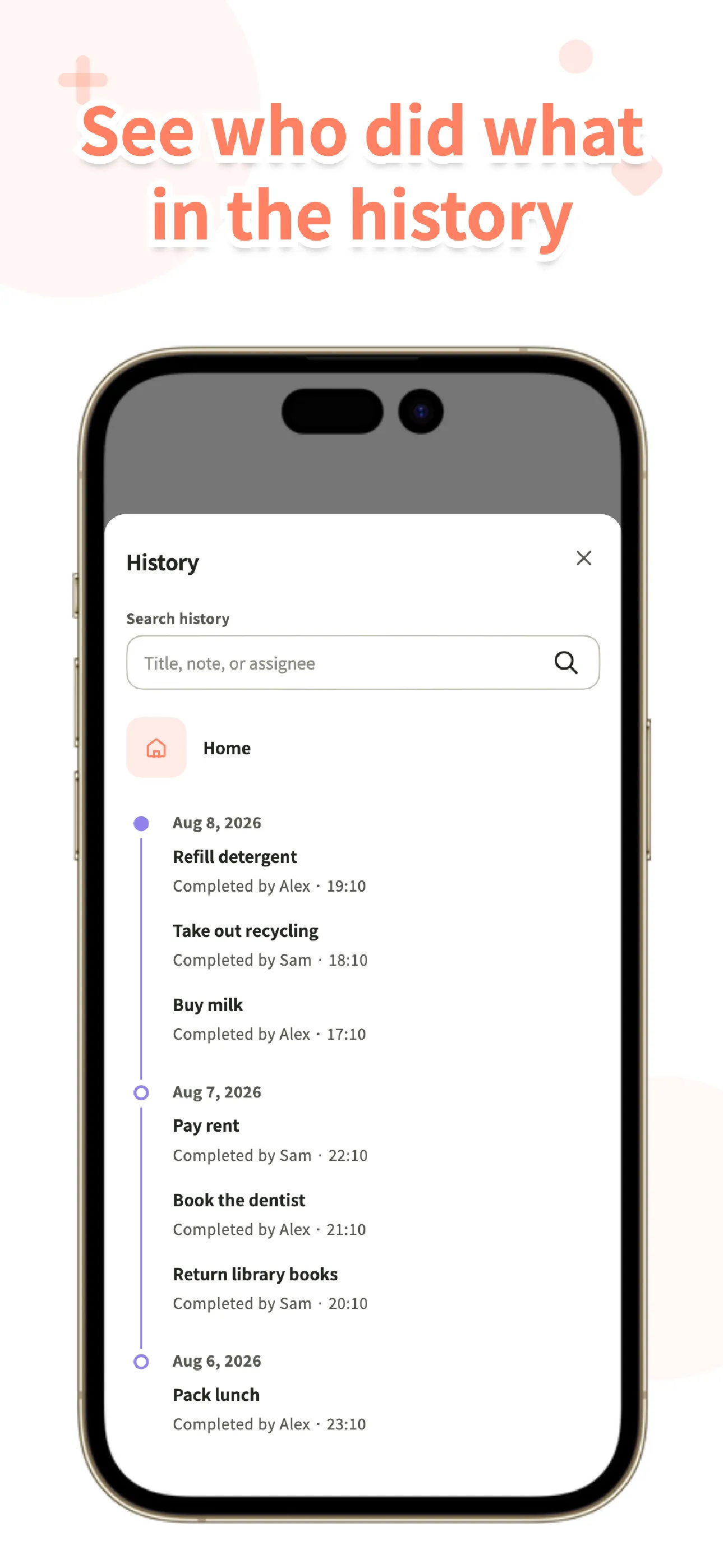
Reminders go out at the time you set for that specific chore, not as one generic daily ping — so a reminder for trash night can land in the evening while a reminder to prep for a monthly clean can land the morning of. And when someone completes a task, everyone in the group is notified, and it moves into a history of who completed what and when. That history is what replaces a scoreboard: instead of asking "did you take the trash out," you can just look. It's visibility, not a leaderboard.
Chores sit on their own shared list, separate from groceries or errands, but everyone in the group sees the same list in the same order — no separate copies to fall out of sync. It works for couples and families, and just as well for roommates splitting a household that isn't a family at all.
Frequently asked questions
What's a good chore app for couples?
Look for a chore app for couples that assigns chores to a specific person, supports repeats for weekly and monthly chores, sends reminders, and shows a history of what's been done — without turning chores into a points contest. Koto was built around exactly that combination, without any scoring.
Do chore apps need points to work?
Not for adults. Points, stars, and allowance systems are effective for motivating kids, but between adults they tend to turn into scorekeeping over who's "ahead." What actually keeps chores moving is a clear assignee, a due date, and a reminder — Koto is built around those instead of a scoring system.
How do roommates split chores fairly?
The most reliable approach is assigning specific chores to specific people with a repeat schedule — trash day to one roommate every week, the bathroom to another — rather than leaving it to "whoever notices." Koto lets a household set that up as a shared list and see, in the history, that it's actually being kept up.
Is Koto free?
Yes. Koto is free for groups of up to 6 people, with no ads and no limits on lists, tasks, repeats, or history. Koto is available now on the App Store and Google Play.