The short answer: a good household chores app tells you who owns each chore, when it's due, and when it comes back — and it still works when your signal doesn't. Whether it also hands out points, rewards, or a fairness score depends on who the chores are for. For kids, that can help. For two adults, or a household that just wants the trash out on Tuesday, it usually gets in the way.
We build Koto, a shared to-do list app for couples and families, so we've spent a lot of time looking at how a household chores app or a family chores app actually gets used after the first week. The apps that survive are rarely the ones with the longest feature list. This article is the checklist we use, plus a short test you can run before you commit your whole household to anything.
Koto is a shared to-do list for chores, groceries, and errands. No points, no scoring, no ads.
See KotoSix things worth checking
Feature pages blur together, so it helps to look for these six specific things. The table sums them up; the details below it explain why each one matters at home rather than at the office.
| What to check | Why it matters | How Koto handles it |
|---|---|---|
| Assignee | “Whose job is it?” is the question a chore app exists to answer | One person, several people, or nobody (open to everyone in the group). When several are assigned, any one of them finishing it completes the task |
| Due date | Turns “at some point” into a day | A due date on each task, plus one optional reminder set as a number of days before and a time you choose |
| Repeats | Chores come back whether or not anyone remembers to re-add them | Weekly on chosen weekdays, monthly by date or by Nth weekday, weekdays only, weekends only, or every N days |
| Offline use | Basements, garages, and cell dead spots are where chores happen | Changes save to your device first and sync when you’re connected again |
| Ads | An ad between you and the trash list is a daily annoyance | No ads, including in free groups |
| Scoring | Points suit kids; between adults they can read as an audit of who did more | None: no points, fairness score, or leaderboard |
The assignee question
Most chore arguments aren't about the chore. They're about nobody being sure whose turn it was. So the first thing to check is how an app handles ownership. A good one lets you give a task to a specific person, and ideally lets you leave it open for either of you to grab. In Koto, a task with nobody assigned counts as everyone's, and the first person to finish it ends it for the whole group. That is the default for “whoever's closest to the store.”
Repeats do most of the work
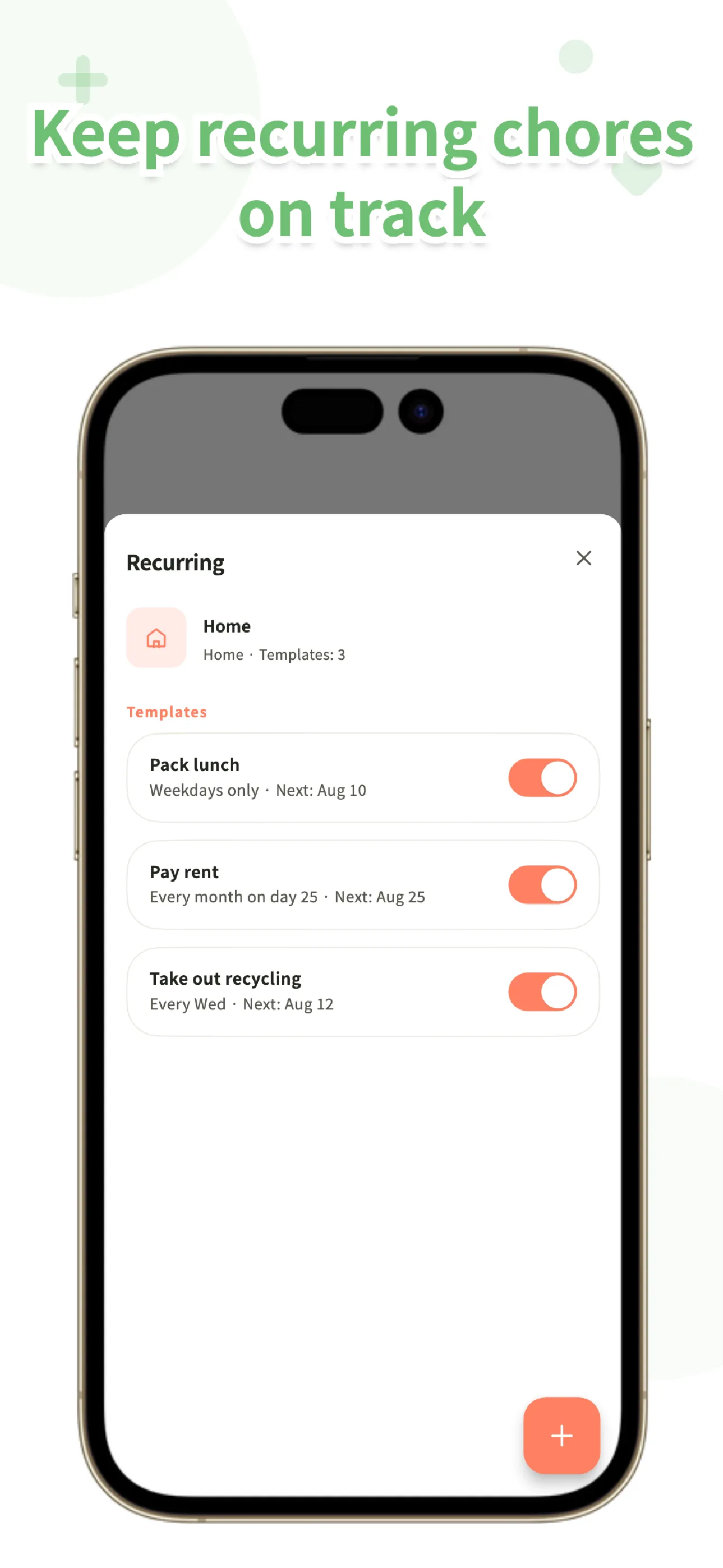
A household's chores are mostly the same handful of tasks on different clocks: the trash every Tuesday and Friday, the bathroom every other Sunday, the filter on the first Saturday of the month. An app that makes you re-enter any of them is a to-do list wearing a chore app's name. Check that you can repeat by weekday, by date, and by something like “the first Saturday.” Then check what happens when you skip one. Koto's default is not to stack a new one on top of an unfinished one, so a week away doesn't greet you with a pile of overdue copies.
Offline, ads, and getting everyone on board
Offline matters more than it sounds. Chores happen in garages, laundry rooms, and storage units, and a list that waits on a connection to open is a list people stop opening. Look for an app that saves changes locally first. Ads matter for the same reason: a household app is something you open several times a day, so interruptions add up quickly.
The sixth check is the least glamorous: how hard is it to get the other person in? If starting means a partner creating an account and filling in a profile before seeing a single chore, adoption stalls. Koto lets you start on one device without an account. When you're ready to share, you send an invite code, and the person who joins picks which of their existing lists to bring into the group.
A ten-minute test before you commit
Don't judge an app by its screenshots. Add five real chores from this week, then try four things. Give one to your partner and see whether it's obvious on their phone. Make one repeat weekly. Turn on airplane mode and check one off. Then look for the record of what got done. If any of these takes more than a minute, that friction will show up every day for a year. It's worth finding out before the whole household has moved in.

Koto
A shared to-do list app for couples and families. Assign chores, repeat them on your schedule, work offline, and see who completed what in the history. No points, no ads. Free groups support up to 6 people.
Learn more about Koto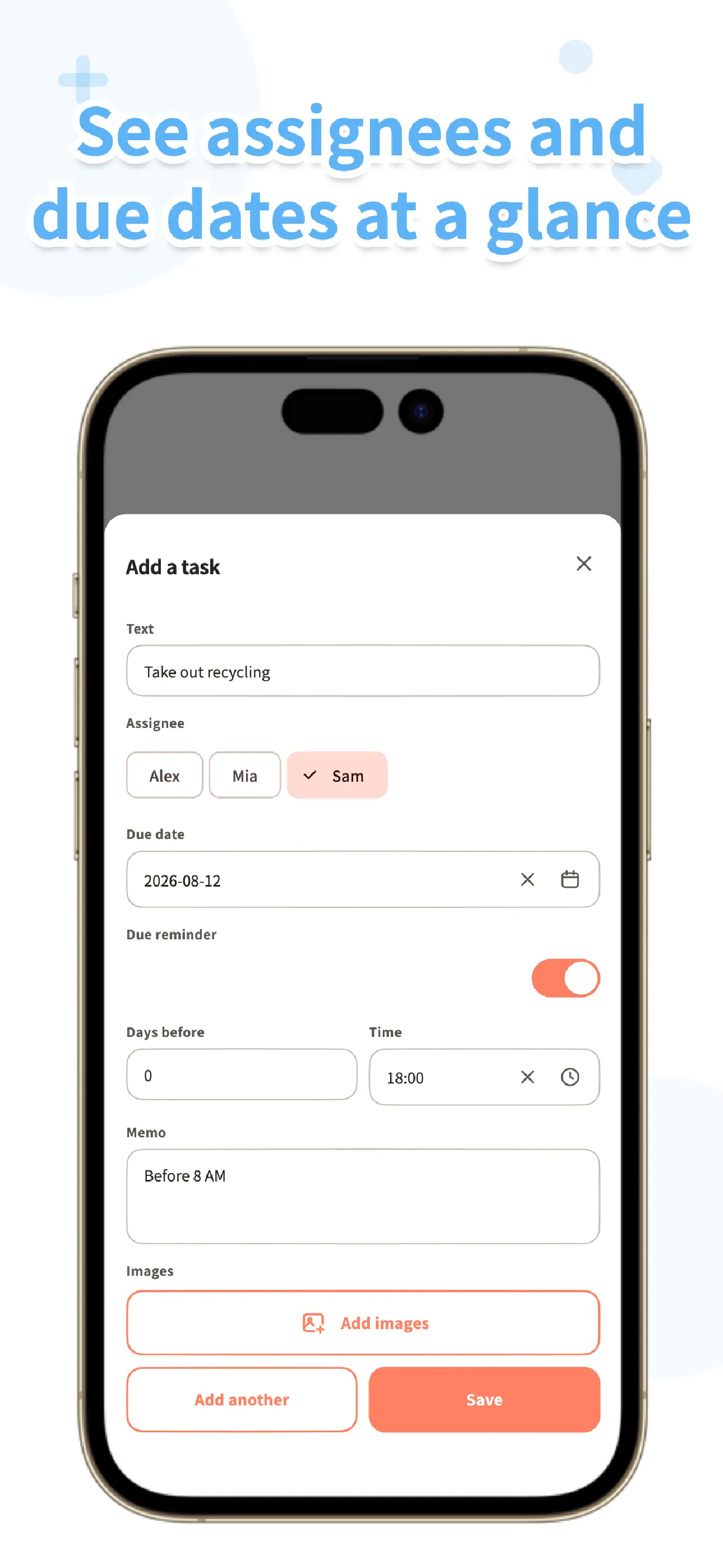
Where Koto isn't the right pick
If you want kids to earn stars or allowance, you want an app built around rewards; Koto deliberately has none. If your main need is a room-by-room cleaning schedule that tells you what is dirtiest, that is a different design. And Koto doesn't schedule events or track money. What it does is keep a short shared list of who does what and when, and it keeps it simple on purpose.
One more thing on pricing: free groups support up to 6 people including the owner, with no limit on list items. BitFlap One, the optional paid plan, raises groups to 30 and adds comments and photos on comments.
Frequently asked questions
What features should a household chores app have?
At minimum: assigning a chore to a person, a due date, repeats that match how chores recur, and a shared view so everyone sees the same list. Offline use and an ad-free experience matter for anything you open daily. Points and rewards are optional and mostly useful for kids.
Should a family chores app use points?
It depends on who the chores are for. Points and stars can motivate children. Between adults, they tend to become scorekeeping, so Koto leaves them out and focuses on who owns each chore and whether it's done.
Do I need an internet connection to use a chores app?
Not with Koto. It saves changes on your device first, so you can add and check off chores offline. Shared groups sync automatically when the connection returns.
Is there a free household chores app with no ads?
Koto has no ads, and free groups support up to 6 people with no limit on list items. You can start on one device without creating an account, then invite others with a code when you want to share.
Koto
Try the ten-minute test with Koto: five real chores, an assignee, a repeat. Free groups support up to 6 people. No ads. Available now on the App Store and Google Play.
Learn more about Koto