We're the OneTapLog team. When you're quitting smoking, the hardest part isn't the decision — it's the sudden urge that rises, peaks, and fades a few minutes later. Each craving comes and goes leaving nothing behind, so you never learn when it tends to hit or what sets it off. In this article we'll talk about how a tiny act of logging can help you ride out the moment and start to see your own patterns.
The urge passes, but it leaves no trace
A craving usually peaks for only a few minutes. If you can get through that window, it loosens its grip — that's the whole game. The trouble is that quitting tends to lean entirely on willpower, and willpower is hard to measure. Without a record, every urge feels like the same uphill battle, and you can't tell whether mid-afternoon, after meals, or stressful calls are your real triggers.
We think giving the urge something to do besides smoking changes things. The act of pulling out your phone and logging the moment is itself a small way to ride it out — and over time those notes turn into a map of your triggers.
When the urge hits, log it in one tap
With OneTapLog, the input field opens the instant you launch the app, so the moment a craving hits you can type something like Urge — got through it, after lunch and send with one tap. The time is stamped for you. Note whether you resisted or gave in, plus a few words on the situation. That's all.
Add #urge in the text and it becomes a tag, so you can later review just those moments. There's no streak counter or motivational scoring here — it's a plain memo. But the simple ritual of logging the craving gives your hands and attention something to do while the peak passes.

The timeline reveals your triggers
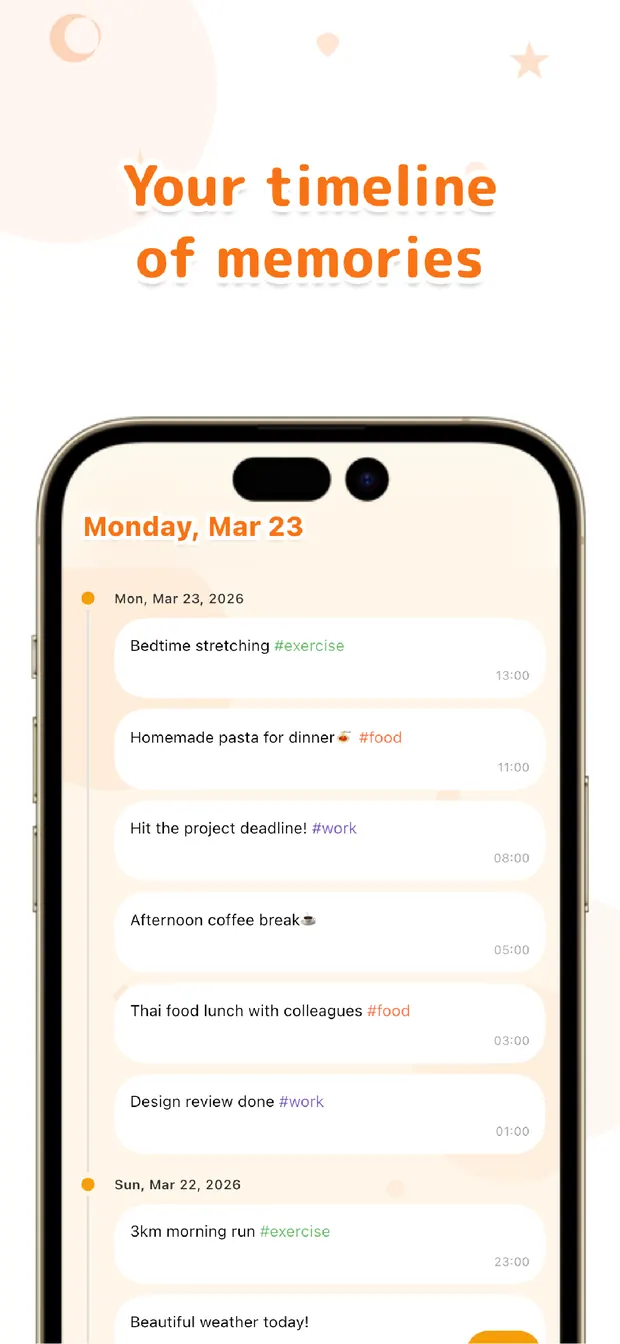
Once a few days of cravings are logged, the timeline shows them in order, and patterns start to surface — the urge clusters after meals, or in the late afternoon, or whenever a certain kind of stress shows up. Seeing the time of day next to each note is often enough to recognize the trigger you'd never quite put into words.
Knowing your triggers lets you prepare. If the urge always lands after lunch, you can plan a short walk for that window instead. None of this needs fancy analytics — it becomes visible simply because you kept leaving a one-tap note each time.
Quitting doesn't have to be pure willpower. Turn each craving into a small action — a one-line log — and you get two things at once: a way to ride out the moment, and a record that shows you your patterns. Log it now, look back later, and the urges you couldn't read start to make sense.

OneTapLog
One line, one tap. Log a craving the moment it hits and ride it out. Spot your triggers later with #tags, the timeline, and search. No account, free to start.
Learn more about OneTapLogFrequently asked questions
How does logging help me ride out a craving?
A craving usually peaks for only a few minutes. Pulling out your phone and logging the moment gives your hands and attention something else to do while that peak passes, which can make it easier to get through.
Does OneTapLog count days smoke-free or score my progress?
No. There's no streak counter, no automatic statistics, and no scoring. It's a quick memo where you note the moment and look back on it later with #tags and the timeline.
How do I find my triggers?
Log a few words about the situation each time, and the timeline shows your cravings in order with the time of day. Patterns like after meals or late afternoon tend to surface on their own.
Should I log even when I give in?
Yes. Noting both the times you resisted and the times you didn't gives you a more honest picture, which makes the triggers easier to read later. The point is consistency, not a perfect record.